Mecheri Sheep: Complete Guide to Breed Characteristics, Farming, Feeding, and Benefits
What Is Mecheri Sheep?
Mecheri sheep is an important indigenous meat-type sheep breed associated primarily with Tamil Nadu in southern India. The breed is officially recognized by the ICAR-National Bureau of Animal Genetic Resources, where Mecheri is listed among India’s registered sheep breeds with Tamil Nadu identified as its home tract. The breed takes its name from the Mecheri area of Salem district, where true-to-type animals have historically been found, although its distribution extends across several nearby districts. Tamil Nadu Agricultural University reports that Mecheri sheep are distributed in Salem, Erode, Namakkal, and parts of Dharmapuri and Karur districts.
For farmers interested in sheep farming, the appeal of the Mecheri sheep breed comes from its combination of moderate body size, meat production, adaptability, and suitability to local farming conditions. Unlike wool-oriented sheep breeds, Mecheri animals have very short hair that generally does not require shearing, which can simplify routine management. TNAU’s Mecheri Sheep Research Station describes the breed as a meat type with a compact body and good adaptability to harsh climatic conditions. Think of the breed as a practical livestock package developed by generations of natural and farmer selection: it is not designed for luxury wool production but for surviving efficiently while producing useful meat and quality skin.
Origin and Home Tract
The traditional home tract of Mecheri sheep is Tamil Nadu, particularly the dry and semi-dry areas around Salem and neighboring districts. TNAU identifies Mecheri, Kolathur, Nangavalli, Omalur, and Tharamangalam areas of Salem district as locations where true-to-type animals can be found. ICAR-NBAGR likewise lists Mecheri under Tamil Nadu’s registered sheep breeds, confirming its status as an established indigenous breed rather than simply a local sheep population.
The breed’s connection with a relatively challenging environment helps explain several of its useful characteristics. Farmers in warm regions generally need animals that can handle heat, utilize available grazing resources, and remain productive without requiring highly intensive systems. Mecheri sheep developed within that context and are therefore particularly relevant to small and medium-scale farmers in southern India. Of course, good management still matters: adaptability does not mean that an animal can be neglected, and adequate water, nutrition, shelter, vaccination, parasite control, and breeding management remain essential for profitable production.
Physical Characteristics of Mecheri Sheep
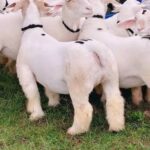
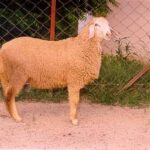
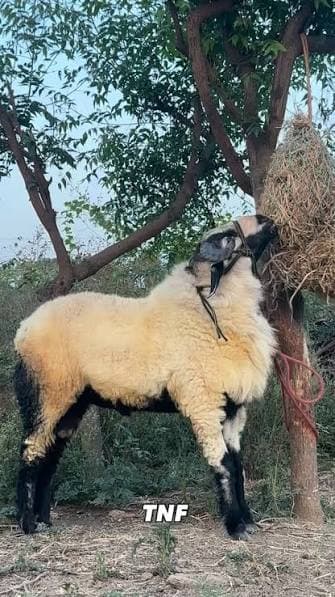
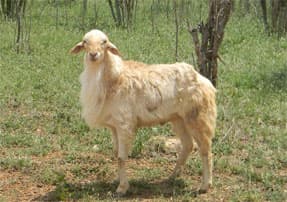
The physical appearance of Mecheri sheep is one of the easiest ways to distinguish the breed from several other Indian sheep breeds. TNAU describes the animals as medium-sized with a compact body, light brown coloration with white patches, medium-sized pendulous ears, and a short, thin, V-shaped tail. Both males and females are naturally polled, meaning they normally do not have horns.
The body is covered with very short hair rather than a heavy woolly fleece. This is especially useful in a warm climate because farmers do not have to organize regular shearing operations simply to manage a thick wool coat. The breed is primarily maintained for meat, and its compact conformation contributes to its value as a mutton animal. Its skin is also considered an important characteristic, with TNAU noting good skin qualities including softness, grain tightness, and tensile strength.
Body Size and Appearance
A mature Mecheri sheep is generally medium-sized rather than exceptionally large. This can actually be an advantage in many smallholder systems because medium-sized animals may be easier to manage, transport, house, and feed than very large breeds. TNAU’s breed information describes the animal as compact and medium-sized, while its Mecheri Sheep Research Station provides average adult body weights of approximately 32.13 kg for males and 28.29 kg for females.
Color can vary in description between sources and populations, but the breed is commonly described as light brown or brown, sometimes with white patches. The ears are medium-sized and pendulous, while the tail is characteristically short and thin. Both sexes are polled, and the coat consists of very short hair. These features make Mecheri sheep visually distinct and practical for farmers who want an indigenous meat breed adapted to southern Indian conditions.
Skin, Hair, Ears, and Tail
The skin of Mecheri sheep deserves particular attention because it is one of the breed’s recognized special characteristics. TNAU describes the skin as having good softness, grain tightness, and tensile strength, characteristics that can add value beyond the meat itself. The short hair coat also means that Mecheri sheep are not generally managed as wool-producing animals. Farmers therefore focus primarily on body growth, reproduction, health, and meat-related performance.
The ears are medium-sized and pendulous, and the tail is short, thin, and V-shaped. These characteristics may seem like small details, but they are useful when identifying animals and maintaining breed purity. When purchasing breeding stock, farmers should consider the overall body structure rather than relying on color alone. A healthy animal should have good body condition, sound legs, alert behavior, a normal mouth and jaw, and no obvious signs of chronic disease.
Mecheri Sheep Weight and Growth
Mecheri sheep weight is an important consideration for farmers because body weight affects market value, breeding decisions, feeding requirements, and expected meat production. TNAU’s Mecheri Sheep Research Station reports average birth weights of 2.88 kg for males and 2.77 kg for females. The same source reports average adult weights of 32.13 kg for males and 28.29 kg for females. Another TNAU breed reference gives approximately 35 kg for adult males and 22 kg for adult females, illustrating that reported values can vary according to the source, management system, age, and population being measured.
For practical farming, the important point is not to expect every sheep to reach one exact number. Genetics, nutrition, grazing availability, disease pressure, age, pregnancy, and management can all influence body weight. A farmer should therefore maintain regular records rather than judging performance only by appearance. Weighing lambs periodically, recording birth dates, tracking growth, and comparing offspring from different rams can gradually improve the productivity of a flock.
Birth Weight and Adult Weight
The relatively moderate birth weight of Mecheri lambs can be useful from a management perspective, although individual lambing performance varies. TNAU records average birth weights close to 2.8 kg, while adult body weight increases substantially as the animals mature. Early nutrition is especially important because poor growth during the first months can reduce future performance and delay the time at which animals reach useful market or breeding weights.
Farmers should not chase rapid weight gain by simply providing excessive feed. A better strategy is to provide balanced nutrition appropriate to age and production stage. Growing lambs need adequate energy, protein, minerals, vitamins, and clean water, while pregnant and lactating ewes have higher nutritional demands. When good genetics are combined with appropriate nutrition and disease prevention, the flock can express its productive potential much more consistently.
Mecheri Sheep as a Meat Breed
The main economic purpose of Mecheri sheep is meat production. TNAU specifically classifies the breed as a meat-type sheep and reports dressing percentages of approximately 54.40% for males and 51.84% for females in the breed information from its research station. Dressing percentage represents the proportion of the live animal’s weight that remains as carcass after slaughter, so it provides one useful indicator of meat-production efficiency.
This meat orientation makes Mecheri sheep particularly relevant to farmers who are not interested in wool production. Instead of investing management effort into maintaining a valuable fleece, the farmer can focus on producing healthy lambs, improving growth, maintaining reproductive performance, and selling animals at suitable market weights. Meat demand, however, varies by location and season, so farmers should study their local market before investing heavily in a commercial flock.
Adaptability to Hot and Dry Climates
One of the most attractive features of Mecheri sheep farming is the breed’s reported adaptability to harsh climatic conditions. TNAU’s Mecheri Sheep Research Station specifically identifies better adaptability to harsh climates as a special characteristic. This is highly relevant in areas where summer temperatures can be challenging and where sheep must make use of available grazing and agricultural by-products.
Adaptability should not be confused with immunity to environmental stress. During severe heat, sheep still require shade, sufficient drinking water, ventilation, and appropriate management. Farmers should also avoid overcrowding because high stocking density can increase heat stress and disease transmission. The real advantage of an adapted indigenous breed is that its basic biological characteristics are suited to the environment in which it has historically been raised, giving farmers a useful foundation for a locally appropriate production system.
Reproductive Performance
Reproductive efficiency determines how quickly a flock can produce replacement animals and market lambs. According to TNAU’s Mecheri Sheep Research Station, males have an average age at first mating of about 12.62 months. Females show first oestrus at approximately 12.06 months, first mating at about 12.35 months, and first lambing at approximately 17.35 months. The reported average lambing interval is about 225.9 days.
These figures provide useful reference points, but farmers should not treat them as guaranteed targets for every flock. Nutrition, health, genetics, season, management, and breeding decisions can influence reproductive results. The best approach is to keep individual records for each ewe, including mating date, lambing date, number of lambs, lamb survival, and subsequent reproductive performance. Over time, such records help farmers identify productive females and avoid repeatedly breeding animals with poor fertility or weak offspring.
Age at First Breeding
Choosing the correct time for first breeding is more important than simply breeding an animal as soon as it reaches a certain age. A young ewe should have sufficient body development and health before breeding. Poor nutrition around breeding and pregnancy can increase the risk of weak lambs and poor maternal performance, while good management supports better reproductive outcomes.
Rams deserve equal attention. A farmer should select breeding rams with good body structure, healthy reproductive organs, strong legs, alert behavior, and desirable breed characteristics. Because one ram can influence many offspring, the quality of the ram can have a surprisingly large effect on the genetic direction of an entire flock. In simple terms, buying a good breeding ram is not merely buying one sheep; it is making a decision about the next generation of your farm.
Feeding and Nutrition Requirements
Feeding is one of the biggest determinants of profitability in Mecheri sheep farming. Sheep can utilize pasture, browse, crop residues, and supplemental feeds, but a profitable flock still needs a nutritionally balanced diet. Growing lambs, pregnant ewes, lactating ewes, breeding rams, and maintenance animals do not all have identical nutritional requirements. Farmers should therefore adjust feeding according to age, body condition, pregnancy status, and production goals.
Grazing can reduce feed costs when suitable pasture is available, but pasture quality changes throughout the year. During periods of poor forage availability, farmers may need to provide conserved fodder or supplementary feed. Clean water should always be available, especially during hot weather. Mineral supplementation may also be appropriate depending on local forage and soil conditions, but farmers should seek advice from a veterinarian or livestock nutrition professional before making major dietary changes.
Housing Management for Mecheri Sheep
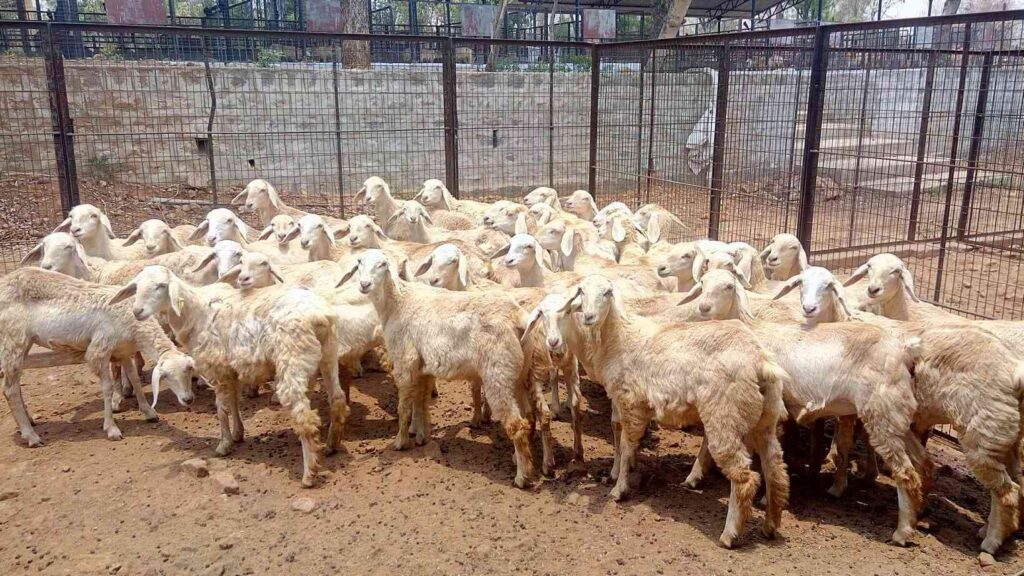
A good sheep shed does not have to be expensive to be effective. The most important requirements are protection from extreme weather, adequate ventilation, dry flooring, good drainage, sufficient space, and easy cleaning. Because Mecheri sheep are adapted to warm conditions, ventilation is particularly important, while shade becomes essential during periods of intense heat.
The shed should be kept reasonably dry and clean to reduce the buildup of manure, parasites, and disease-causing organisms. Overcrowding should be avoided because it increases competition for feed and water and can encourage the spread of infections. Separate areas can be useful for lambing ewes, young lambs, sick animals, and newly purchased sheep. A simple quarantine area is particularly valuable because new animals can otherwise introduce disease into an established flock.
Health Care and Disease Prevention
Healthy sheep grow faster, reproduce more reliably, and generally require fewer emergency treatments. A flock health program should include vaccination according to local veterinary recommendations, parasite control, clean drinking water, suitable nutrition, regular observation, and prompt treatment of sick animals. Farmers should watch for warning signs such as loss of appetite, diarrhea, coughing, nasal discharge, lameness, unusual breathing, weakness, or sudden changes in behavior.
Disease prevention is usually cheaper than disease treatment. New animals should be isolated and monitored before being mixed with the main flock. Feeding areas and water containers should be cleaned regularly, while grazing management can help reduce parasite exposure. Farmers should work with local veterinary authorities to develop a vaccination and deworming schedule suited to the diseases common in their area rather than copying a schedule designed for a completely different region.
Mecheri Sheep Farming Advantages
There are several reasons why Mecheri sheep can be attractive to farmers in southern India. First, the breed is officially recognized as an indigenous Indian sheep breed, and its home tract is Tamil Nadu. Second, it is primarily a meat breed, giving the farmer a straightforward production objective. Third, TNAU identifies adaptability to harsh climatic conditions and good skin quality among its special characteristics.
Another advantage is that the breed’s short hair coat eliminates the need for routine wool shearing. The animals are medium-sized, and their management can fit a range of production systems, from grazing-based smallholder farms to more organized commercial units. None of these advantages guarantees profit, however. Feed prices, lamb mortality, disease, breeding quality, labor, market prices, and farm management all influence the final economics.
Mecheri Sheep Farming Challenges
Every livestock breed has limitations, and responsible farmers should understand them before investing. Mecheri sheep are medium-sized, so farmers specifically seeking very large carcass weights may prefer a different production strategy. Local market conditions can also affect profitability, and a breed that performs well biologically may still generate disappointing returns if animals are purchased too expensively or sold without understanding market demand.
Another challenge is maintaining genuine breed characteristics. As commercial sheep farming expands, indiscriminate crossbreeding can gradually change local populations. Farmers who want to maintain pure Mecheri breeding stock need to keep accurate records and select animals based on recognizable breed characteristics and performance. Conservation is not simply about keeping an old breed alive; it is about preserving useful genetic traits that may become increasingly valuable as climates and production systems change.
Mecheri Sheep vs Other Indian Sheep Breeds
India has a large diversity of sheep breeds adapted to different environments and production objectives. ICAR-NBAGR’s current list includes breeds such as Mecheri, Mandya, Nellore, Nilgiri, Coimbatore, Madras Red, Vembur, Ramnad White, and several others. This diversity is one of India’s greatest livestock resources because farmers can select breeds that match their climate, feed resources, and market requirements.
Mecheri stands out particularly as a southern Indian meat breed adapted to the Tamil Nadu environment. Compared with wool-focused breeds, its production system is simpler because the animal has a short hair coat rather than a commercially important wool fleece. Compared with very large sheep, its medium body size can be easier to manage. The right breed, though, is always the one that matches the farmer’s conditions; there is no single sheep breed that is automatically best for every farm.
| Feature | Mecheri Sheep |
|---|---|
| Home tract | Tamil Nadu |
| Main purpose | Meat |
| Body size | Medium |
| Coat | Very short hair |
| Horns | Both sexes generally polled |
| Adult male weight | About 32–35 kg in cited TNAU references |
| Adult female weight | About 22–28 kg in cited TNAU references |
| Tail | Short, thin and V-shaped |
| Major advantage | Adaptability and meat production |
| Important additional trait | Good-quality skin |
The weight figures vary between published TNAU references because measurements can differ between populations and management systems.
How to Start a Mecheri Sheep Farm
Starting a Mecheri sheep farm should begin with planning rather than immediately purchasing animals. First, determine how much land, water, labor, shelter, and feed are available. Next, estimate the number of animals that the available resources can realistically support. TNAU’s sheep-farming guidance mentions a unit of around 20–30 ewes with one ram as a possible enterprise structure, but the appropriate flock size depends on the farmer’s resources and management capacity.
The next step is sourcing healthy breeding stock. Whenever possible, purchase from reliable breeders or recognized livestock institutions and inspect the animals carefully before buying. Establish records from the beginning so that you know the identity, parentage, birth date, breeding history, and health history of each animal. Starting small can also be sensible because it allows a new farmer to learn flock management before taking on a large financial commitment.
Selecting Healthy Mecheri Sheep
Selecting good sheep is one of the most important decisions a farmer makes. A prospective breeding animal should be alert, active, structurally sound, and free from obvious signs of disease. Look at the eyes, mouth, legs, hooves, coat, breathing, body condition, and overall movement. For breeding animals, reproductive soundness and previous reproductive performance should be considered whenever records are available.
Breed characteristics should also be examined. A farmer seeking Mecheri breeding stock should look for the typical compact medium-sized body, short hair, appropriate color and markings, short thin tail, pendulous ears, and naturally polled condition described by TNAU. However, appearance alone is not enough. A sheep that looks excellent but repeatedly produces weak offspring may be less valuable genetically than a less impressive-looking animal with strong growth, fertility, survival, and maternal performance.
Breeding Management
Good breeding management can gradually improve the performance of a flock. Farmers should avoid indiscriminate mating and keep records of which ram is paired with which ewes. This helps prevent excessive inbreeding and makes it possible to identify families that consistently produce healthy, fast-growing lambs. A breeding program should prioritize fertility, growth, mothering ability, survival, sound feet and legs, and conformity to the desired breed type.
The ewe’s condition before mating is also important. Underfed animals may have poor reproductive performance, while excessively fat animals can face other management problems. During pregnancy, nutritional requirements increase, particularly as lambing approaches. After lambing, adequate nutrition and clean water become essential for milk production and lamb survival. Good breeding is therefore not simply a mating event; it is a complete management cycle that begins before conception and continues until the lamb is successfully weaned.
Fodder and Grazing Management
A strong fodder plan can make the difference between a profitable sheep enterprise and an expensive one. Mecheri sheep can be maintained in grazing-based systems, but pasture availability and quality vary throughout the year. Farmers should consider growing or conserving suitable fodder when possible so that the flock is not completely dependent on uncertain grazing resources.
Grazing should be managed rather than simply allowing animals to remain continuously on the same land. Rotational or controlled grazing can help protect pasture, reduce excessive pressure on vegetation, and improve long-term feed availability. Crop residues can also contribute to feeding systems when they are suitable and properly managed. The objective is to create a reliable feed pipeline: pasture when available, conserved fodder when necessary, and balanced supplementary feed during periods of high nutritional demand.
Economic Potential of Mecheri Sheep Farming
The economic potential of Mecheri sheep farming depends on the relationship between input costs and the value of animals sold. Major expenses can include breeding stock, feed, fodder cultivation, labor, housing, veterinary care, medicines, transportation, and mortality losses. Income can come primarily from selling lambs or mature animals for meat, while breeding stock may have additional value when farmers maintain good-quality animals.
A useful business approach is to calculate the cost per lamb produced rather than looking only at the sale price of individual sheep. Suppose a farmer sells an animal for a good price but spends excessively on purchased feed and suffers high lamb mortality; the business may still perform poorly. Conversely, a well-managed flock with good survival, efficient grazing, sound reproductive performance, and access to strong markets can potentially achieve better margins.
Farmers should maintain simple records covering births, deaths, feed expenses, medicine expenses, breeding performance, animal purchases, animal sales, and final sale weights. These records turn sheep farming from guesswork into a measurable business. Over several production cycles, the farmer can identify which practices actually improve returns.
Conservation and Future Importance
The conservation of Mecheri sheep has significance beyond individual farms. ICAR-NBAGR officially recognizes Mecheri as a registered Indian sheep breed, and ICAR has also highlighted conservation work involving the breed. In its 2025 Breed Conservation Awards, ICAR recognized the Tamil Nadu Veterinary and Animal Sciences University for its contribution to the conservation of Mecheri sheep.
Indigenous breeds carry genetic characteristics shaped by local environments and farming systems. As climate variability increases and livestock producers look for animals that can function under challenging conditions, these genetic resources can become increasingly valuable. Conservation therefore does not mean preventing improvement; it means ensuring that valuable genetic diversity is not lost while farmers continue improving productivity through selection and better management.
For Mecheri sheep, the future is likely to involve a balance between conservation and commercial production. Farmers need animals that are productive and profitable, while researchers and breeding organizations need to preserve the breed’s identity and adaptive characteristics. Supporting quality breeding programs, maintaining accurate records, encouraging responsible flock management, and educating farmers can help achieve both goals.
Frequently Asked Questions About Mecheri Sheep
1. What is Mecheri sheep mainly used for?
Mecheri sheep is primarily a meat-purpose breed. Tamil Nadu Agricultural University classifies it as a meat-type sheep and reports useful carcass characteristics, including dressing percentages of approximately 54.40% for males and 51.84% for females in its breed research information. The breed is therefore more suitable for farmers focused on meat production than for farmers seeking a wool-producing sheep.
2. Where are Mecheri sheep found?
Mecheri sheep are mainly associated with Tamil Nadu. TNAU reports their distribution in Salem, Erode, Namakkal, and parts of Dharmapuri and Karur districts, with true-to-type animals reported particularly in several areas of Salem district. ICAR-NBAGR lists Tamil Nadu as the breed’s home tract.
3. What is the average weight of Mecheri sheep?
The reported weight depends on age, sex, management, and the source of the data. TNAU’s Mecheri Sheep Research Station reports average adult weights of approximately 32.13 kg for males and 28.29 kg for females, while another TNAU reference gives about 35 kg for males and 22 kg for females. These figures should be treated as reference values rather than guaranteed weights for every individual.
4. Do Mecheri sheep have horns?
Normally, both male and female Mecheri sheep are polled, meaning they do not have horns. TNAU identifies the breed’s males and females as polled as part of its breed characteristics. Hornlessness is therefore one of the useful physical features when assessing typical Mecheri sheep.
5. Is Mecheri sheep suitable for hot climates?
Yes, the breed is recognized for its adaptability to harsh climatic conditions. TNAU’s Mecheri Sheep Research Station specifically lists better adaptability to harsh climatic conditions as one of the breed’s special characteristics. Even so, farmers should provide adequate shade, water, ventilation, nutrition, and health care during periods of severe heat.
Conclusion
Mecheri sheep is one of India’s important indigenous meat sheep breeds and has a particularly strong connection with Tamil Nadu. Its medium-sized compact body, short hair coat, naturally polled males and females, useful meat-production characteristics, quality skin, and reported adaptability to harsh climatic conditions make it an attractive breed for farmers operating in suitable environments. Its value is not based on one spectacular characteristic; rather, it comes from the combination of traits that fit practical livestock farming.
For anyone planning a Mecheri sheep enterprise, the most important lesson is that the breed itself is only part of the equation. Good genetics need good nutrition, and good nutrition needs proper health care, housing, breeding management, and market planning. Farmers who maintain accurate records and select animals based on both breed characteristics and real performance can gradually build a stronger flock. With responsible management and continued conservation efforts, Mecheri sheep farming can remain an important part of sustainable sheep production in southern India.