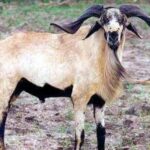
The Deccani Sheep breed is mainly found in the Deccan Plateau, encompassing the states of Karnataka, Maharashtra, and Andhra Pradesh. Four different strains of Deccani Sheep are Sangamneri, Lonand, Kolhapuri, and Solapuri (Sangola).
These sheep breeds are a combination of hairy types from Tamil Nadu and Andhra Pradesh, and woolly types from Rajasthan. Besides, they possess natural resistance to many common diseases. Some of the key features are:
The Deccani Sheep indian breed is mainly found in the Deccan Plateau, encompassing the states of Karnataka, Maharashtra, and Andhra Pradesh. Four different strains of Deccani Sheep are Sangamneri, Lonand, Kolhapuri, and Solapuri (Sangola).
These sheep breeds are a combination of hairy types from Tamil Nadu and Andhra Pradesh, and woolly types from Rajasthan. Besides, they possess natural resistance to many common diseases. Some of the key features are:
- They are small, hardy, and well-settled in poor pastoral conditions.
- They have coloured fleece, with grey and black being the dominant shades.
- They produce low-grade wool and are chiefly used to manufacture rough blankets (Kambals).
- The flocks of this sheep breed are maintained primarily for mutton.
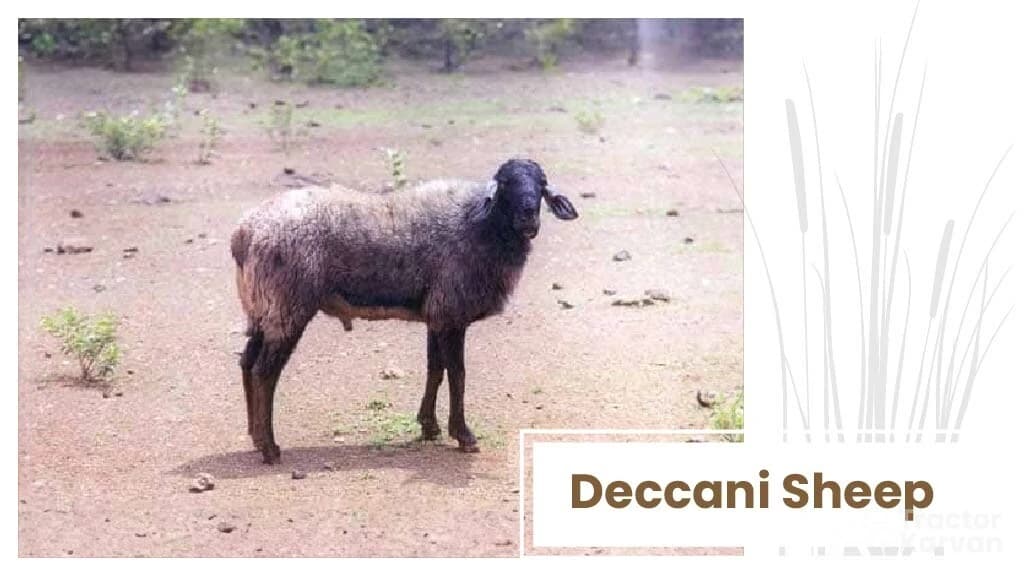
Deccan Sheep Indian Breed
The Deccani sheep is one of the most important Indian breed of sheep, widely recognized for its exceptional adaptability, hardiness, and ability to thrive in the semi-arid regions of India. Primarily found in the states of Maharashtra, Karnataka, Telangana, and parts of Andhra Pradesh, this breed has been an integral part of traditional sheep farming for centuries. Deccani sheep are mainly raised for meat production, although their coarse wool is also utilized for manufacturing blankets, rugs, and other low-grade woolen products. Their ability to survive under harsh climatic conditions, utilize poor-quality grazing resources, and resist common diseases makes them a preferred choice among small and marginal farmers. As an indigenous Indian breed, the Deccani sheep plays a vital role in supporting rural livelihoods, ensuring food security, and contributing to the sustainable development of the livestock sector. With proper breeding, nutrition, and health management, Deccani sheep continue to offer a profitable and low-maintenance option for commercial as well as traditional sheep farming, making them one of India’s most valuable native livestock breeds.
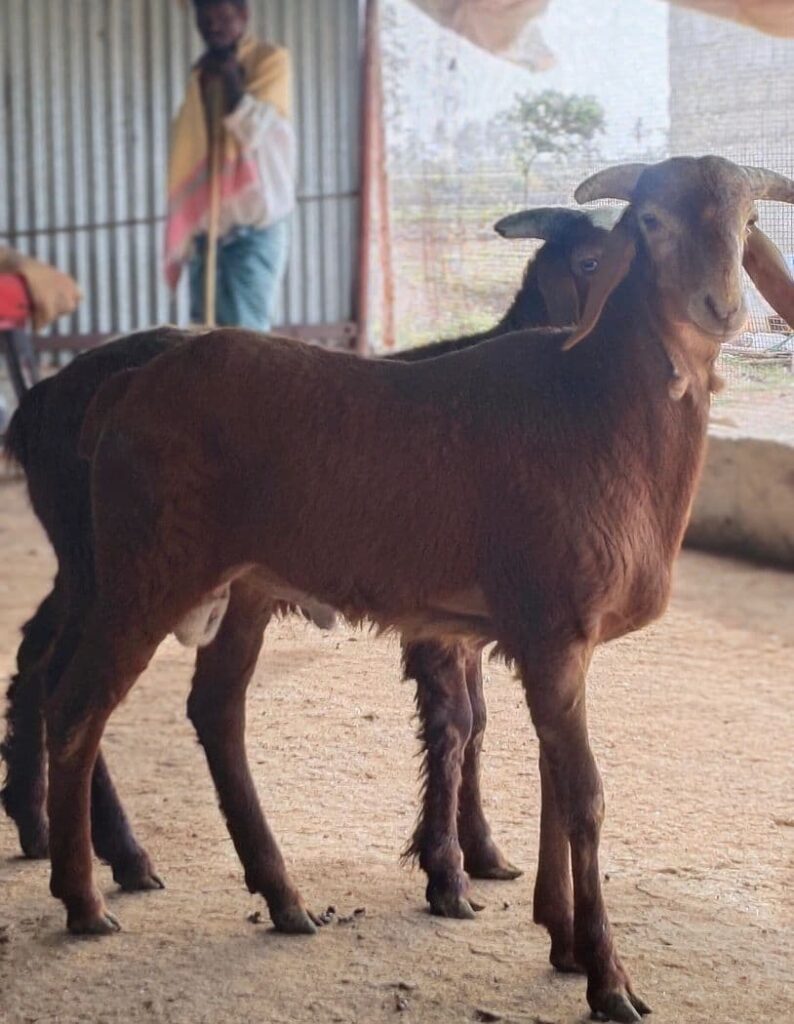
- Deccani Sheep: Everything You Need to Know About This Indian Breed
- Deccani Sheep : Characteristics, Uses, Farming Guide & Benefits
- Deccani Sheep – Complete Guide for Farmers and Livestock Enthusiasts
- Why Deccani Sheep Is One of the Best Indian Breed for Sheep Farming
- Deccani Sheep : Origin, Features, Management and Profitability
- Deccani Sheep : A Complete Guide to India’s Hardy Sheep
- Deccani Sheep Indian Breed: History, Characteristics and Commercial Importance
- Deccani Sheep Indian Breed: Breed Profile, Care and Economic Value
- Deccani Sheep Indian Breed for Meat Production: Complete Farming Guide
- Deccani Sheep Indian Breed: Everything Farmers Should Know
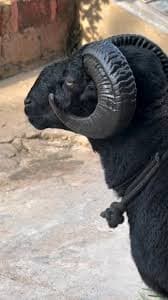
Key Characteristics of Deccani Sheep Indian Breed
The Deccani Sheep Indian Breed features a highly distinct physical profile. They are medium-sized animals with a prominent Roman nose, dropping ears, and a short, thin tail.
When evaluating the Deccani Sheep Indian Breed, color and fleece structure stand out. It is the only pure black, coarse wool variety native to the country. While over 50% of the population is entirely black, some variations display grey, roan, or white spots on the body. The rams typically sport elegant, curved horns, whereas the ewes are usually polled (hornless).
Weight and Growth Chart
The growth performance of the Deccani Sheep Indian Breed makes it a highly profitable asset for small-scale farmers and commercial operations alike. On average, their life-stage weights progress as follows:
- Birth Weight: 2.7 kg to 3.2 kg
- Weaning (3 Months): 11.5 kg to 14 kg
- Adult Female (Ewe): 28 kg to 30 kg
- Adult Male (Ram): 38 kg to 40 kg
Dual-Purpose Utility: Meat and Wool
Primarily valued for its meat, the Deccani Sheep Indian Breed yields an exceptional dressing percentage of around 47%. Despite common myths favoring other varieties, research by the ICAR-Central Sheep and Wool Research Institute confirms that the Deccani Sheep Indian Breed provides highly competitive carcass weights and superior feed conversion efficiency.
Beyond mutton, the Deccani Sheep Indian Breed generates an annual fleece yield of roughly 4.5 kg to 5 kg. This coarse, low-grade black wool plays a deep cultural role. It is traditionally handspun and woven into the iconic Gongadi blankets, which are celebrated for their weatherproofing and durability.
Why Choose the Deccani Sheep Indian Breed?
- Drought Resilience: The Deccani Sheep Indian Breed survives prolonged dry spells and excels in extensive, migratory grazing systems.
- Low Maintenance: They thrive easily on low-quality forage, crop residues, and sparse scrub vegetation.
- Disease Resistance: The Deccani Sheep Indian Breed possesses a natural biological immunity to many common tropical infections.
- High Kid Survival: They exhibit remarkably low lamb mortality rates compared to delicate, exotic crossbreeds.
Conservation Status
Despite its incredible advantages, the pure Indian Breed faces an eco-crisis today. Due to rapid, uncontrolled crossbreeding with non-wool hairy varieties (like the Nellore), pure genetic lines are disappearing. Organizations like the National Bureau of Animal Genetic Resources are actively pushing for localized conservation frameworks. Preserving the Sheep secures both India’s animal biodiversity and rural economic stability.